

Vulnerability: The Doorway to Connection
Vulnerability is the thing many men spend their lives avoiding, and the doorway to the connection they want most. After many years of working with men, I've seen that the act of saying a true thing out loud, to another person who can hear it, is often what starts the healing. Not the solution. The speaking.

Authenticity Over Performance: A Personal Story
For most of my adult life, I called my social exhaustion introversion. What I eventually saw was that a large part of it wasn't really about being around people, it was about managing impressions while being around people. The hidden second conversation running underneath every conversation is what drains most men, not the people themselves.
The Slow Cost of Going It Alone
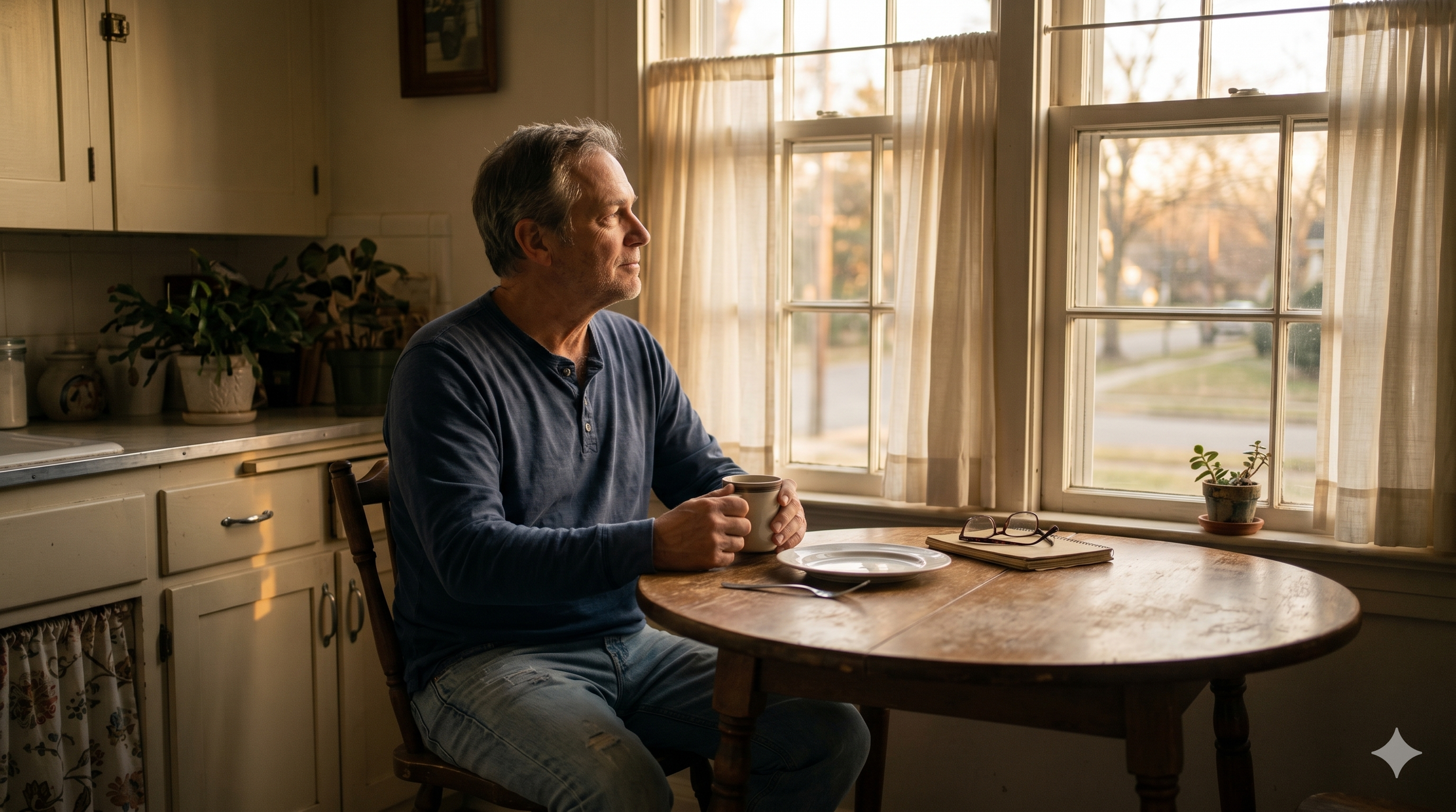
Loneliness in men rarely shows up as a crisis. It arrives one quiet inch at a time, over decades, through small non-actions, calls you didn't make, friendships you didn't maintain, conversations you didn't have. By the time men recognize it, it has been part of the furniture of their lives for so long that they've stopped thinking of it as something to address.

Loneliness vs. Solitude: Knowing the Difference
The difference between loneliness and solitude isn't the picture, it's the internal experience. Solitude is being comfortably with yourself, it restores you. Loneliness is feeling unmet by anyone, including yourself, it drains you. From the outside, the two look identical. From the inside, they're opposite.

Why Men Struggle to Talk About Loneliness
Most men struggle to talk about loneliness because they were never shown how. The cultural conditioning is to compete, perform, endure, and joke, not to name an inner state directly. So instead of saying "I feel disconnected," most men translate it into safer language: "I'm tired," "I'm fine," or "It's a busy season." The loneliness stays silent.

The Hidden Symptoms of Male Loneliness
The hidden symptoms of male loneliness rarely look like sadness. They look like irritability, emotional flatness, background anxiety, overworking, drinking more, and pulling back from friendships. Most lonely men don't recognize loneliness as the underlying cause, they attribute it to stress, age, or busyness.

Why So Many Men Feel Alone (Even When Surrounded by People)
Many men carry a particular kind of loneliness that doesn't look like isolation — it looks like functioning. They go to work, raise kids, answer texts, run busy lives, and still feel that no one really knows what's going on inside them. This kind of loneliness has grown sharply as the social structures that used to produce deep male friendship such as neighborhoods, shared physical work, faith communities, civic groups, have eroded.